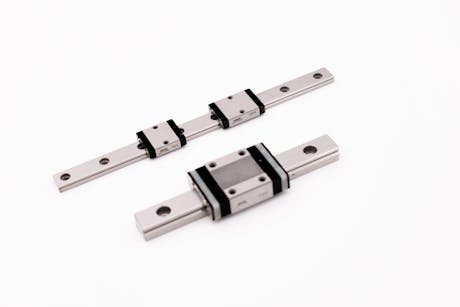
Brake and Clamping Elements
For securely holding linear guides and round shafts — manually or pneumatically actuated, with spring-applied force for safety on power failure.
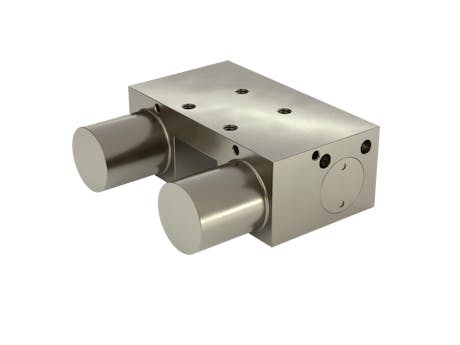
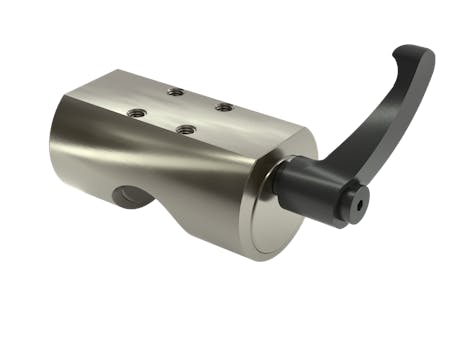
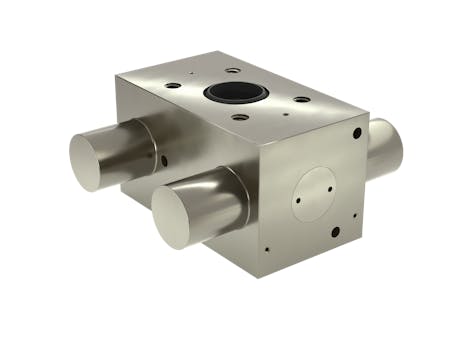
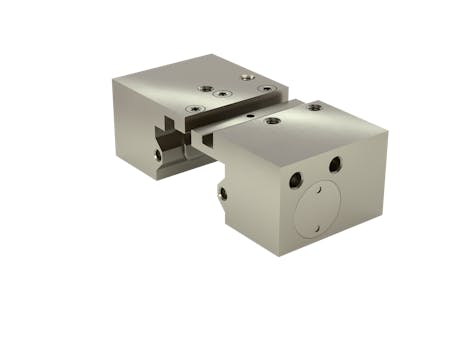
Holding safely once the motion stops
Brake and clamping elements hold a linear axis in position once the movement is complete. They relieve the drive, increase the stiffness of the axis during machining, and take on a safety function on vertical axes.
The operating principle is what matters: spring-applied versions clamp through spring force and are released pneumatically. If power fails, the element closes by itself and holds the load — an important consideration on suspended Z axes. Clamping and braking functions are combined in a single unit.
Versions
- Versions for profile rail guides and for round shafts
- Manually operated or connected to a pneumatic supply
- With spring-applied force to store clamping force on power failure
- Clamping and braking function combined in one unit
- Developed specifically for applications with linear guides
- Precise and reliable positioning through integrated spring force
Versions and actuation types
| Version | Actuation | Characteristics |
|---|---|---|
| For profile rail guides | pneumatic | Spring-applied clamping on pressure loss, released by compressed air |
| For profile rail guides | manual | Clamping by hand, for setup and adjustment work |
| For round shafts | manual or pneumatic | Clamping directly on the round shaft |
| Combined brake/clamp unit | pneumatic | Braking and clamping function combined in a single unit |
Where brake and clamping elements are used
- Fall protection for vertical Z axes
- Holding function on power failure
- Position fixing during machining
- Relieving the drive at standstill
- Setup and adjustment work
- Safety functions in special machinery
Questions about brake and clamping elements
What are brake and clamping elements used for?
They hold linear guides and round shafts in the position reached. This relieves the drive at standstill, increases the stiffness of the axis during machining, and secures vertical axes against dropping.
What does spring-applied mean in this context?
On spring-applied versions a spring generates the clamping force and the element is released pneumatically. If power fails the element closes by itself and holds the load. That is an important safety function, above all on suspended Z axes.
Are manually operated versions available?
Yes. Alongside pneumatically actuated elements, manually operated versions are available, which are particularly suited to setup and adjustment work.
Will the elements fit my existing guide?
The elements are developed specifically for use with linear guides and round shafts. Tell us the design and size of your guide and we will identify the matching version.
Brake and Clamping Elements
For securely holding linear guides and round shafts — manually or pneumatically actuated, with spring-applied force for safety on power failure.