
Screw Drives
Ball screws in rolled and ground versions as well as lead screws — for positioning axes, lifting axes and feed drives.
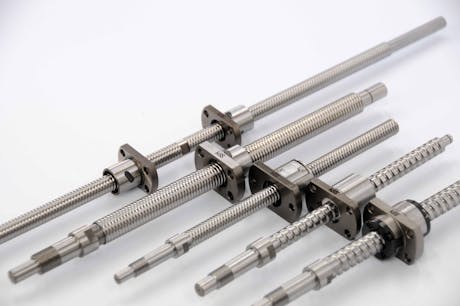
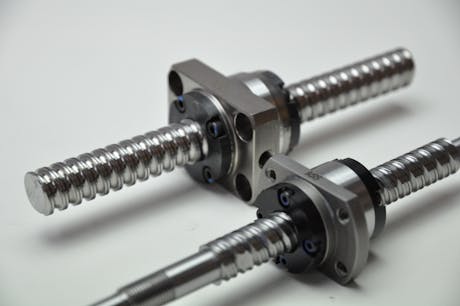
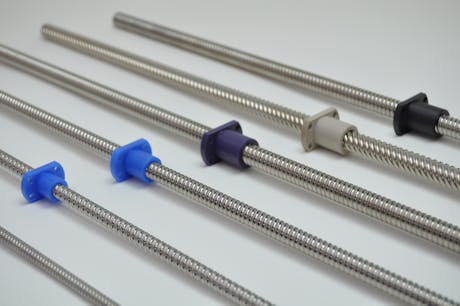
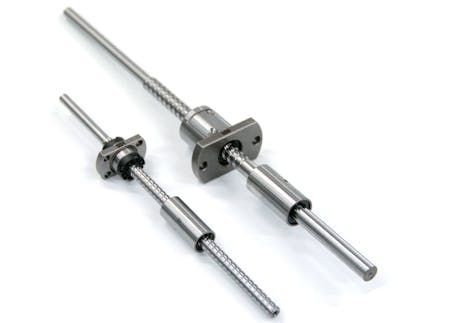
Ball screw or lead screw, whichever the application needs
Screw drives convert rotary motion into linear motion and therefore determine how accurately and how economically an axis positions. Choosing between a ball screw and a lead screw is usually a trade-off between efficiency and self-locking behaviour.
Ball screws reach efficiencies well above 90 percent and suit dynamic axes with high positioning accuracy. Lead screws run on sliding friction, which makes them low-maintenance and, depending on the lead, self-locking — an advantage on vertical axes that should hold position without a brake.
Versions
- Ball screws in rolled versions from 4 mm diameter
- Ball screws in ground versions from 3 mm diameter
- Lead screws with various nut options
- Single and double nuts, preloaded or with clearance
- Versions for application-specific requirements
- End machining and cutting to length to drawing
Designs and diameters at a glance
| Design | Diameter from | Characteristics |
|---|---|---|
| Ball screw, rolled | 4 mm | Economical manufacture, high efficiency, suits the majority of applications |
| Ball screw, ground | 3 mm | Tighter lead tolerances, for high positioning accuracy |
| Lead screw | per application | Sliding friction, low maintenance, self-locking depending on lead |
| Nut versions | – | Single or double nut, preloaded to reduce backlash |
Where screw drives are used
- Positioning and feed axes
- Vertical lifting axes (Z axes)
- Machine tools
- Press and clamping systems
- Handling and automation
- Laboratory and medical technology
Questions about screw drives
From which diameter are ball screws available?
We supply rolled ball screws from 4 mm diameter and ground versions from 3 mm diameter.
What is the difference between rolled and ground ball screws?
Rolled screws are formed rather than cut and are more economical; they cover the majority of applications. Ground screws are machined to tighter lead tolerances, which makes them worthwhile wherever high positioning accuracy is required.
When is a lead screw the better choice?
Lead screws work with sliding friction instead of recirculating balls. They run more quietly, need less maintenance and can be self-locking depending on the lead. That is particularly useful on vertical axes that should hold position without an additional brake.
Do you also carry out end machining of the screws?
Yes. Screws can be cut to length and machined at the ends to your drawing. Please send the drawing with your enquiry.
Screw Drives
Ball screws in rolled and ground versions as well as lead screws — for positioning axes, lifting axes and feed drives.
Other categories
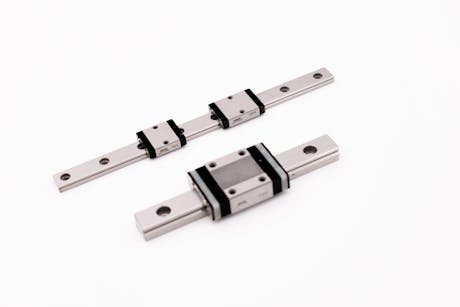
Linear Guides
Profile rail guides, miniature guides, cross roller guides and round shaft guides — in all common sizes and accuracy classes.
View details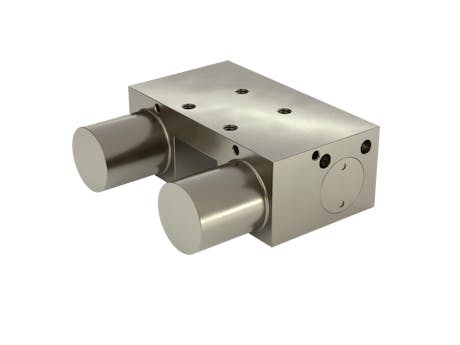
Brake and Clamping Elements
For securely holding linear guides and round shafts — manually or pneumatically actuated, with spring-applied force for safety on power failure.
View details